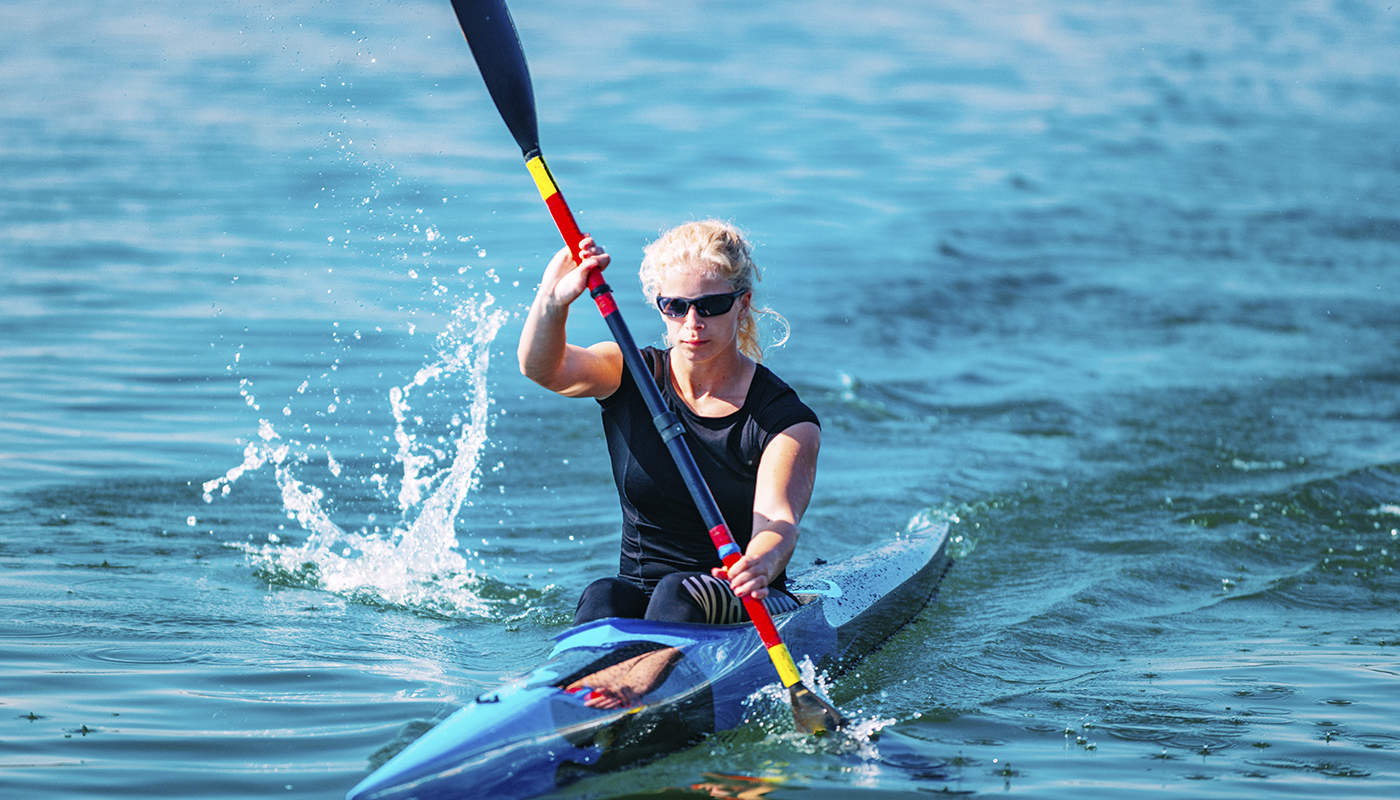
Kayaking is relatively easy to begin, but a comfortable first experience depends on more than simply getting into a boat and starting to paddle. Basic technique, suitable equipment, awareness of weather conditions, and a clear understanding of personal limits can make the difference between an enjoyable trip and an unnecessarily difficult one.
For new paddlers, the goal should not be speed or distance. The first outings are better used to develop control, confidence, and efficient movement while learning how the kayak responds to wind, waves, and changes in body position. These seven kayaking tips for beginners cover the fundamentals that make that process easier.
1. Choose a kayak that matches the conditions
A beginner does not necessarily need the fastest or most specialized kayak available. Stability, comfort, and suitability for the intended water conditions are usually more important during the first trips.
Recreational kayaks are commonly used on calm lakes, protected bays, and slow-moving rivers because their wider hulls generally provide more initial stability. Sit-on-top models can also be practical for beginners, particularly in warm conditions, because entering and exiting them is straightforward and there is no enclosed cockpit to manage after a capsize.
The kayak should also fit the paddler physically. Footrests need to be reachable without forcing the legs into an uncomfortable position, while the seat should provide enough support to maintain an upright posture. A kayak that is too small, too large, or poorly adjusted can make even basic steering more difficult.
New paddlers should therefore select the boat according to the environment rather than appearance or maximum speed. A stable platform makes it easier to learn the movements that will later transfer to more advanced kayaks.
2. Learn how to hold the paddle correctly
Paddling efficiently starts with the position of the hands. One of the most common beginner mistakes is gripping the paddle too tightly or placing the hands either too close together or excessively wide.
A useful starting position is to hold the paddle slightly wider than shoulder width, keeping the wrists relatively straight. The grip should remain secure without constant tension in the hands and forearms. Excessive force does not improve control and can quickly produce fatigue.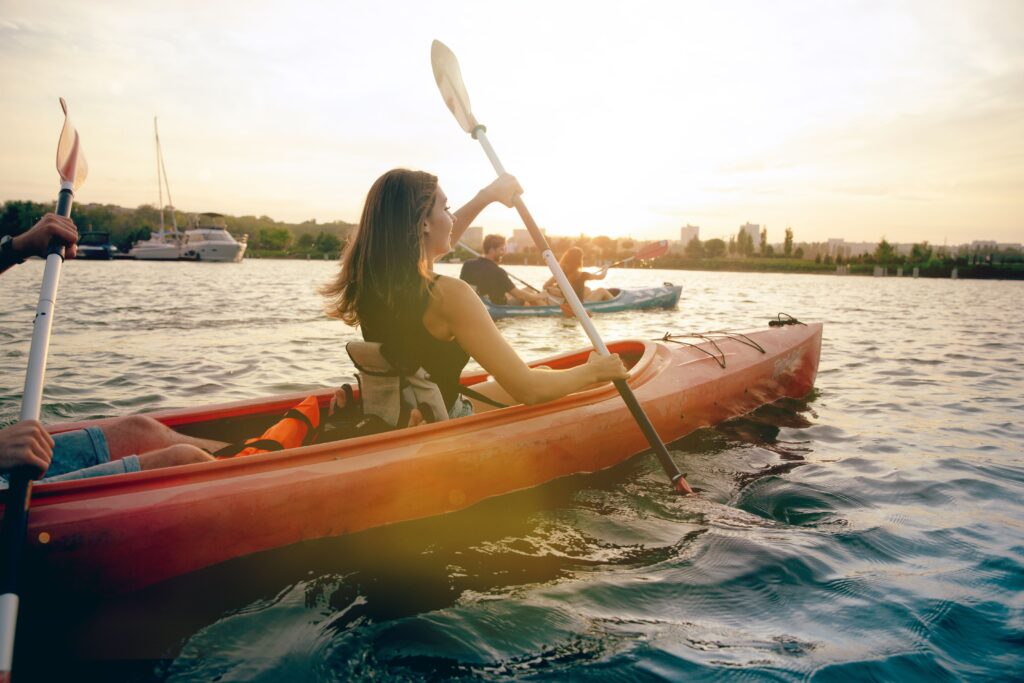
The paddle blades also need to be oriented correctly. Most modern paddles are designed so that each blade enters the water cleanly and transfers force through the stroke. Before launching, it is worth taking a moment to identify the front and back of the blades and determine whether they are feathered at an angle.
This simple adjustment is among the most useful kayaking tips for beginners, because an incorrect grip affects every stroke performed during the trip.
3. Use the torso rather than only the arms
Kayaking may appear to be primarily an upper-body activity, but efficient paddling depends heavily on torso rotation. Beginners who pull almost entirely with their arms often become tired much earlier than expected.
During a forward stroke, the blade should enter the water near the feet and move alongside the kayak before leaving the water around hip level. At the same time, the torso rotates slightly, allowing the larger muscles of the back and core to contribute to the movement.
This technique distributes the workload more effectively and produces a smoother stroke. It also reduces the tendency to make short, rapid movements that consume considerable energy without creating much forward speed.
Posture matters as well. Sitting upright allows the paddler to rotate naturally, whereas leaning heavily against the backrest limits movement. The legs should remain slightly bent, with the feet supported against the footrests so that the lower body can help stabilize the kayak.
Learning this movement slowly on calm water is more valuable than trying to paddle quickly before the technique feels natural.
4. Wear a properly fitted personal flotation device
A personal flotation device should be treated as standard kayaking equipment rather than something reserved for rough water. Conditions can change, and even an experienced swimmer may have difficulty after an unexpected capsize, particularly in cold water or strong current.
The flotation device should fit closely enough that it cannot slide upward over the head when lifted at the shoulders. At the same time, it should allow sufficient freedom around the arms and torso for normal paddling movements.
Beginners should also become familiar with the equipment before launching. Adjusting straps while already on the water is inconvenient, and discovering that a flotation device restricts movement halfway through a trip can create unnecessary discomfort.
Safety equipment becomes particularly important when paddling alone, although beginners are generally better served by going with another person or an organized group during their first outings. Having another paddler nearby provides immediate assistance if equipment fails or someone struggles to re-enter a kayak.
5. Check the weather and understand the route before launching
Water that looks calm at the starting point may behave very differently several kilometers away. Wind direction, current, temperature, boat traffic, and approaching weather systems can all affect how demanding a kayaking route becomes.
Beginners should start with relatively short trips on sheltered water and understand both the planned route and the available exit points. A straightforward return route is particularly useful because fatigue often becomes noticeable only after turning back.
Wind deserves special attention. A paddler who travels easily with a tailwind may face a much more demanding return journey when paddling directly against it. The same principle applies to river current and tidal movement.
Checking the forecast should therefore become part of normal trip preparation. When conditions appear uncertain, reducing the distance or choosing a more protected location is usually preferable to treating difficult weather as an opportunity to test new skills.
6. Practice balance instead of fighting every movement
 Kayaks naturally move underneath the paddler, particularly when small waves pass beneath the hull. Beginners often respond by becoming rigid and trying to prevent every movement, which can actually make balance more difficult.
A more effective approach is to keep the upper body relaxed while allowing the kayak to move slightly underneath the hips. The head and torso should remain relatively centered over the boat rather than following every small tilt.
Calm, shallow water provides a good environment for developing this feeling. Small weight shifts help demonstrate how much movement the kayak can tolerate before stability becomes a concern. Over time, the paddler begins to distinguish normal movement from a genuine loss of balance.
Looking ahead rather than constantly watching the kayak also helps. Focusing on the horizon or the intended direction generally produces a more stable posture and improves awareness of other boats, obstacles, and changing water conditions.
7. Dress for the water temperature, not only the air
Warm weather can create a false impression that little protective clothing is necessary. However, water temperature may remain considerably lower than air temperature, and an unexpected capsize can expose a paddler to cold conditions immediately.
Clothing should therefore be selected according to both the weather and the water. Quick-drying synthetic layers are generally more suitable than materials that remain wet for a long time. In colder conditions, specialized paddling clothing such as wetsuits or drysuits may become necessary depending on the environment.
Sun protection is another consideration during longer trips. Open water provides limited shade, while reflected sunlight can increase exposure. Suitable clothing, a hat, sunscreen, drinking water, and basic protection for personal belongings can make several hours on the water significantly more comfortable.
Beginners should also avoid taking unnecessary loose objects into the kayak. Essential items such as a phone, identification, and additional clothing can be stored in waterproof bags and secured so they remain with the boat after a capsize.
Good preparation allows the paddler to concentrate on technique rather than solving avoidable problems during the trip. With a suitable kayak, correct paddle use, basic safety habits, and gradual practice on manageable water, kayaking can become a controlled and accessible activity from the first outing onward.